Quick answer: The check most people skip is the independent construction stage inspection. An independent inspector attends your site at the slab, frame, lock up, fixing and practical completion stages, then reports on the work against the National Construction Code, relevant Australian Standards and your approved plans. Your building surveyor does not do this for you.
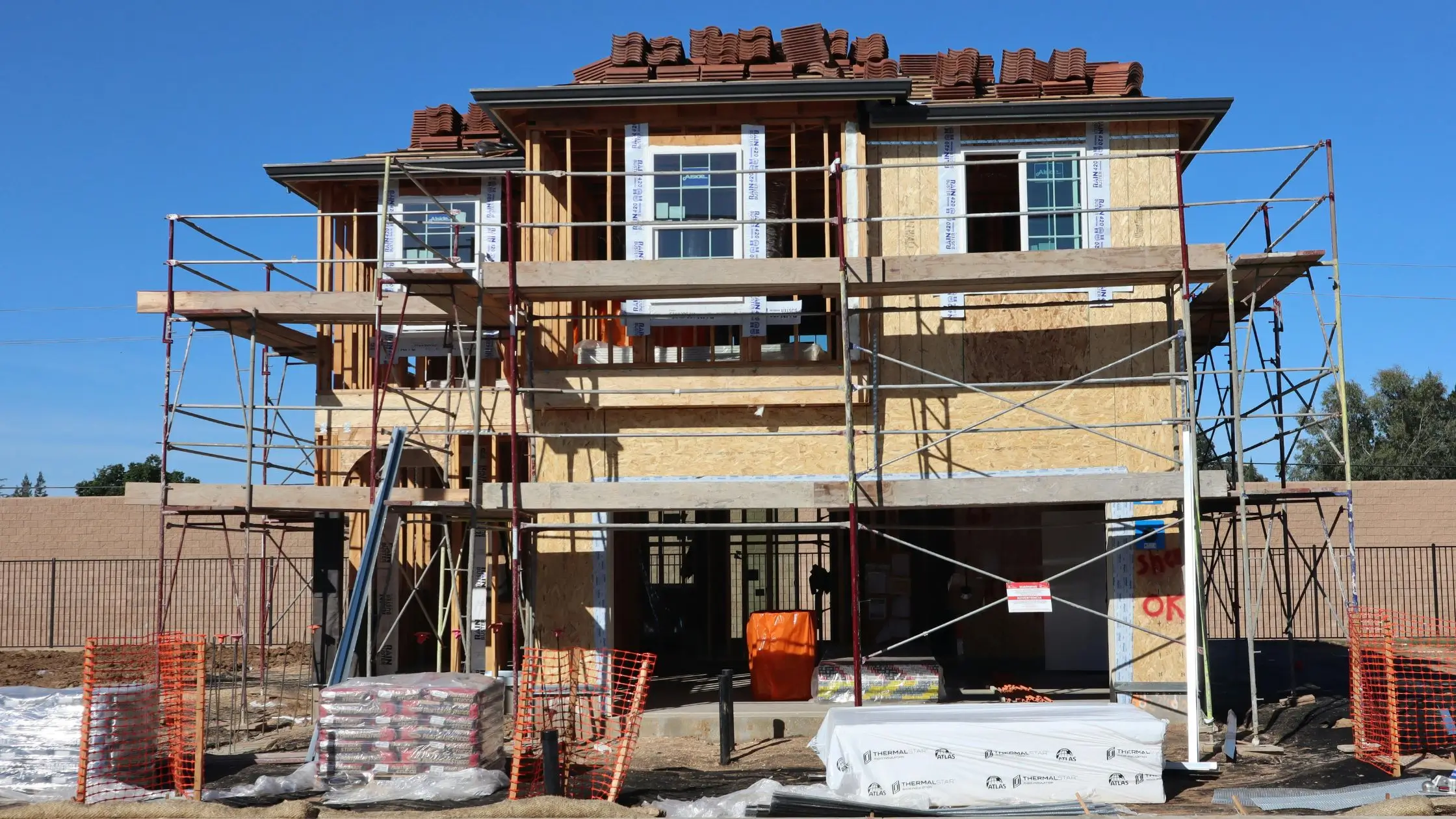
Table of Contents
You watch the slab go down. The frame goes up. Plaster covers the frame. Paint covers the plaster. Somewhere in that sequence, the part of your home you paid the most for became invisible.
Most people building in Melbourne or Geelong assume someone has already checked the work. There is a building permit. There is a registered building surveyor. There are mandatory inspections listed in the contract. It feels covered.
It is not covered the way you think. A 2016 survey referenced by the Victorian Auditor-General’s Office found that one in four residential builds in Victoria involved a dispute between the owner and the builder. That is a lot of people who believed the same thing you believe right now.
This article explains what your surveyor actually signs off on, which five key stages of the building process determine your home’s quality, and what it costs when nobody looks.
Key Takeaways:
- Your relevant building surveyor checks permit compliance, not build quality, and they are engaged for the permit rather than for you.
- Five major stages carry almost all of the risk: slab stage, frame stage, lock-up stage, fixing stage, and practical completion.
- Each of those construction stages sits directly before a stage payment, which makes your payment schedule mirror the booking calendar.
- Defects found at frame stage cost a conversation. The same defects found after handover cost money, time and often a dispute.
- Termite protection and timber pest risk both begin during the construction process, so a new build is not automatically pest-free.
- Independent inspections are voluntary in Victoria, which is exactly why most owners never get one.
Your Building Surveyor Is Not Your Building Inspector
This is where the confusion starts, so it is worth clearing up first.
Every building project in Victoria has a relevant building surveyor. They issue the building permit, and they carry out mandatory inspections at prescribed points in the build. Their job is compliance with the Building Act, the Building Regulations and the permit. The Building and Plumbing Commission describes those inspections as an assessment of “overall compliance of the building work with the Act, Regulations and building permit up to that point in time.”
Read that again. Compliance up to that point. Not finish quality. Not whether your cabinetry lines up. Not whether the waterproofing was applied the way the manufacturer specifies. Not whether your builder has met the building standards written into your building contract.
There is a second issue. The surveyor is usually appointed by your builder. They are not working for you, and they will not walk you through the site or write you a home inspection report you can act on.
An independent building inspector works the other way around. You engage them, they attend at stages you choose, and the report comes to you.
|
Relevant building surveyor |
Independent building inspector |
|
|
Who engages them |
Usually the builder |
You |
|
What they assess |
Building codes, regulations and permit compliance |
Workmanship, finish and compliance with your contract |
|
When they attend |
Mandatory inspections only |
Any construction stage you book |
|
What you receive |
A permit record |
A detailed report with photographs |
|
Who they answer to |
The permit |
You |
Both have a role. Only one of them gives you an unbiased assessment of the work you are paying for. That gap is why construction-stage inspections exist.
The 5 Construction Stage Inspections That Decide Your Build Quality
Timing matters more than thoroughness here. A brilliant house inspection at handover cannot see through plaster. A basic inspection at the right moment can save you tens of thousands.
These are the five key stages where quality assurance actually happens.
Stage 1: Slab Stage Inspection Before the Concrete Slab Is Poured
This inspection must occur before the pour. Once you have a poured concrete slab, the evidence is gone for the life of the house.
An inspector attending a pre-pour looks at:
- Steel reinforcement placement, lapping and concrete cover
- Formwork setout against the approved plans and the engineer’s design
- Vapour barrier condition, including tears and taping around penetrations
- Termite management systems and their correct installation at penetrations
- Service penetrations, pipe positions and any conflicts with reinforcement
- Site preparation, fill compaction and footing depths for the soil classification
Reactive clay soils sit under a large part of Melbourne and Geelong. Slab performance on those sites depends on details you can only see for a few hours before the concrete truck arrives.
Stage 2: Frame Stage Inspection of Wall and Roof Frames
The wall and roof frames support your roof, walls, and windows. This is also the last stage where structural integrity is fully visible.
A frame inspection covers:
- Wall and roof frames checked against the approved plans and engineering
- Tie downs, bracing and fixings, including hold-down bolts and strapping
- Studs, plates and lintels for correct sizing, grade and spacing
- Notching and drilling where plumbers and electricians have cut through structural members
- Frame straightness, plumb and level, since these carry through to every finish that follows
- Roof trusses for damage, correct support and bracing
Steel frame construction gets the same treatment, with fixings, bracing and connection points checked against the manufacturer’s specification.
Oversized studs are among the most common defects found at this stage. A plumber runs a pipe, a chunk of a load-bearing stud disappears, and nobody mentions it. Plaster goes on two weeks later.
Stage 3: Lock Up Inspection at the Pre-Plaster Stage
The lock up stage is your last look at the building envelope. After the pre-plaster stage, linings go up, and everything behind them disappears.
A lock up inspection covers:
- External cladding installation, fixing and expansion joints
- Roof plumbing, including flashings, valleys, gutters and downpipes
- Window and external doors installation, sealing and flashing
- Wet areas waterproofing before tiling and linings
- Insulation placement and coverage
- Weatherproofing at every junction where two materials meet
Water gets in at junctions. Junctions get covered at lock up. That is the whole argument for this inspection.
Stage 4: Fixing Stage Inspection of Internal Linings and Wet Areas
The fixing stage is when your home starts to look finished, which is exactly when standards slip.
The inspection covers:
- Plasterboard installation, jointing and finish level
- Cornices, skirtings and architraves
- Door hangings, clearances and hardware
- Cabinetry installation, alignment and benchtop fit
- Tiling layout, falls and grouting in wet areas
- Finish tolerances written into your contract
Raising substandard work at fixing stage gives your builder room to fix it as part of the normal build. Raising it at handover turns it into a defect list, and defect lists get argued about.
Stage 5: Practical Completion Inspection Before Handover
Practical completion is the major milestone where you take the keys and release the final payment. It is also the last moment you hold any real leverage.
A practical completion inspection documents every outstanding item in writing before you sign:
- Paint coverage, finish and damage
- Door and window operation
- Tapware, fixtures and appliance function
- External drainage falls and site finish
- Glazing, scratches and damaged surfaces
- Anything left incomplete
That pre-handover report becomes the list your builder works from, and it sets out what must be rectified satisfactorily before the final stages close out. Sign first, and you are asking for a favour. Inspect first, and you get what you paid for.
Book Your Stage Inspections Around Stage Payments, Not Build Dates
Victorian domestic building contracts follow a standard payment schedule. Consumer Affairs Victoria sets out the maximum percentage payable at each stage, and those stages line up almost exactly with the construction inspections above.
|
Stage payment |
Maximum % of contract price |
Inspection that should come first |
|
Deposit |
5% (contracts of $20,000 or more) |
Nil |
|
Base stage |
10% |
Pre-slab and slab stage inspection |
|
Frame stage |
15% |
Frame stage inspection |
|
Lock up stage |
35% |
Lock up and pre plaster inspection |
|
Fixing stage |
25% |
Fixing stage inspection |
|
Completion |
10% |
Practical completion inspection |
Look at lock up. You hand over 35% of your contract price at a single stage, and that stage covers the parts of your home most likely to leak. Consumer Affairs Victoria is blunt about the risk in its own guidance: “Do not pay in advance. Domestic building insurance gives you limited cover and may not pay claims on work paid for in advance.”
The rule is simple. Inspect before you release the payment, never after. Our guide to the building inspection stages sets out how each visit runs and when to book it.
Do You Still Need a Building and Pest Inspection on a Brand New Home?
Owners assume a new home cannot have a pest problem. New timber, new slab, nothing has had time to go wrong.
Termite risk starts at the slab, not years later. Termite protection goes in during construction, usually as a physical barrier or a chemical treatment around penetrations and the slab perimeter. Later trades work around those same penetrations. Barriers get cut, moved or covered with soil and paving. Nobody goes back to check, because the system is already signed off.
Three things quietly defeat a working barrier after handover:
- Garden beds built up against the slab edge
- Paving laid over the inspection zone
- Mulch stacked against weep holes
Timber can also arrive with a problem. Frames sit on site through rain, sometimes for weeks. Stored timber absorbs moisture and occasionally attracts pests before it is ever installed.
A combined building and pest inspection makes the most sense in two situations:
- You are buying a completed spec home, display home or investment property and never saw the build, which makes this a pre-purchase inspection rather than a stage inspection.
- You are approaching the end of your builder’s warranty period and want the barrier confirmed while it is still someone else’s problem.
Prospective buyers of a near-new home get the most value here, because a pest inspection reaches areas that a walkthrough never will.
What It Costs to Skip Independent Inspections
The same defect carries three very different price tags depending on when you identify defects.
- Found at frame stage, an overcut stud is a phone call. Your builder installs a stud brace or replaces the member. You pay nothing. The build continues.
- Found at handover, that same defect is invisible. It shows up later as a cracked cornice or a sticking door, and by then it is buried behind plaster, insulation and paint. Now you are paying for investigation before anyone even quotes the fix.
- Found in year three, you are managing a dispute. You are proving the defect existed at the time of construction, and you are relying on your builder still being in business. That last part is not guaranteed.ASIC recorded 2,975 construction companies entering external administration in 2023-24, which was 27% of all external administrations in the country and more than any other industry.
Victoria’s dispute system carries the overflow. The Auditor-General’s report shows that Domestic Building Dispute Resolution Victoria averaged 5,780 cases per financial year between 2017 and 2023.
Major defects are the ones that follow you. The cheapest defect is the one found while it is still exposed. A builder’s warranty inspection before your warranty period closes is your last inexpensive opportunity.
What a Usable Independent Inspection Report Should Contain
Home inspections are only worth what the report can do for you. Some reports get results. Others get filed and forgotten. A thorough report earns its cost through four things:
- Photographic evidence. Every item photographed, dated and located. A defect described in words invites debate. A defect photographed does not.
- Referenced standards. Findings point to the National Construction Code clause or the relevant Australian Standards, along with the approved plans where they apply. This turns an opinion into a compliance issue.
- Major and minor defects separated. You need to know which items are structural or weatherproofing failures and which are finish items. Both belong in the report. Only one of them should hold up a payment.
- Language your builder can act on. A comprehensive report says what is wrong, where it is and what the standard requires. Site supervisors work from clear instructions.
Ask for a sample report before you book anything. A new home inspection report should be readable by someone who has never been on a building site, and it should read the same way whether it covers a frame stage or a pre handover visit.
Owner-builders have a further requirement. Selling within six years and six months of completion requires a Section 137B report prepared by licensed inspectors before the property goes to market.
Local Build Conditions Across Melbourne and Geelong
Two homes built to identical plans face different risks depending on where they sit.
Melbourne Metropolitan Builds
Reactive clay soils run through much of Melbourne’s west and north. Suburbs like Werribee, Tarneit and Craigieburn sit on soils that move with moisture, which puts pressure on:
- Slab design and stiffening beam depth
- Footing depth for the site classification
- Site drainage and moisture control around the perimeter
Volume estate builds add a second factor. One site supervisor can be running a dozen or more homes at once across a single estate. Trades move fast, work gets signed off quickly, and small errors travel from one stage to the next before anyone catches them. Building inspections in Melbourne tend to find the same defects repeatedly for exactly this reason.
Geelong, Bellarine and Surf Coast Builds
Coastal exposure changes the specification. Homes in Barwon Heads, Ocean Grove, Torquay and Anglesea need corrosion-resistant fixings, fasteners and flashings suited to the salt environment. Substituting a standard product for a coastal-rated one is easy to miss on site and expensive to discover later.
Two more local factors deserve close attention:
- Bushfire attack level requirements apply across parts of the Surf Coast and Golden Plains, and BAL compliance touches windows, decking, screening and subfloor detailing.
- Newer estates around Armstrong Creek and Lara often involve engineered fill, so site classification and footing design need to be checked before the pour.
Building inspections in Geelong usually start with those two questions.
You Only Get One Look Behind the Plaster
Building a new home puts you in an unusual position. You are paying hundreds of thousands of dollars for work you cannot assess, on a schedule you do not control, with the money leaving your account before the work is finished.
Nobody in that arrangement is checking the build on your behalf unless you appoint them. The surveyor has a defined regulatory role. The builder is assessing their own work. The bank releases funds against a progress claim, not against the quality of the building.
Independent inspections close that gap for a fraction of the cost of one defect found late. Five visits, five reports, five moments where somebody with no stake in the payment schedule looks at the work and tells you what they see. The peace of mind is a by-product. The real return is a house that performs the way it was designed to.
The stages are already in your contract. All you are deciding is whether anyone looks at them.
Don't Sign the Next Progress Payment Blind
Your next invoice is probably already on the way. Once you pay for it, the work behind it stops being negotiable and becomes your problem.
An independent inspector walks your site before that payment clears and gives you a written report with photographs you can hand straight to your builder. Ripple Building Inspections carries out new home building inspections across Melbourne metropolitan suburbs, Geelong, the Bellarine and the Surf Coast on fixed fees with no surprises. Have a look at our service areas and pricing, then book the stage closest to you.