Buying a Property: Inspection Guides

Key Takeaways
- A pre-purchase building inspection is visual and non-invasive. It reports on accessible areas only and lists any limitations.
- A timber pest inspection under AS 4349.3 is a separate assessment that covers termites, borers, and fungal decay.
- Auction buyers in Victoria have no cooling-off period, so inspect before you bid.
- Private-sale buyers can negotiate a building or timber pest inspection condition into the contract.
- A pre-settlement inspection checks condition and inclusions before settlement. It does not replace pre-purchase due diligence.
- Inspection reports note visible building defects. They are not a certificate of building code compliance.
The open inspection went well. The paint is fresh and the floors are polished. Yet a well-presented home can still hide rising damp, roof leaks or movement in the footings. Fresh paint can cover cracking. A rug can sit over damaged flooring.
A pre-purchase building inspection gives you an independent view of a property’s visible condition before you commit to buying it. A qualified inspector looks past the presentation and documents defects, safety hazards and areas that need further investigation. Adding a timber pest inspection extends that assessment to termites and other timber pests.
This guide is a starting point for anyone buying residential property in Victoria. It explains which inspections to consider, when to arrange them and how to use the findings.
Table of Contents
What Is a Pre-Purchase Building Inspection?
A pre-purchase building inspection is a professional assessment of a residential property’s condition carried out before you buy it. The inspector records visible defects, safety hazards and signs of deterioration, then explains the findings in a written report.
In Australia, these inspections are generally carried out in line with AS 4349.1, the Australian Standard for pre-purchase inspections of residential buildings.
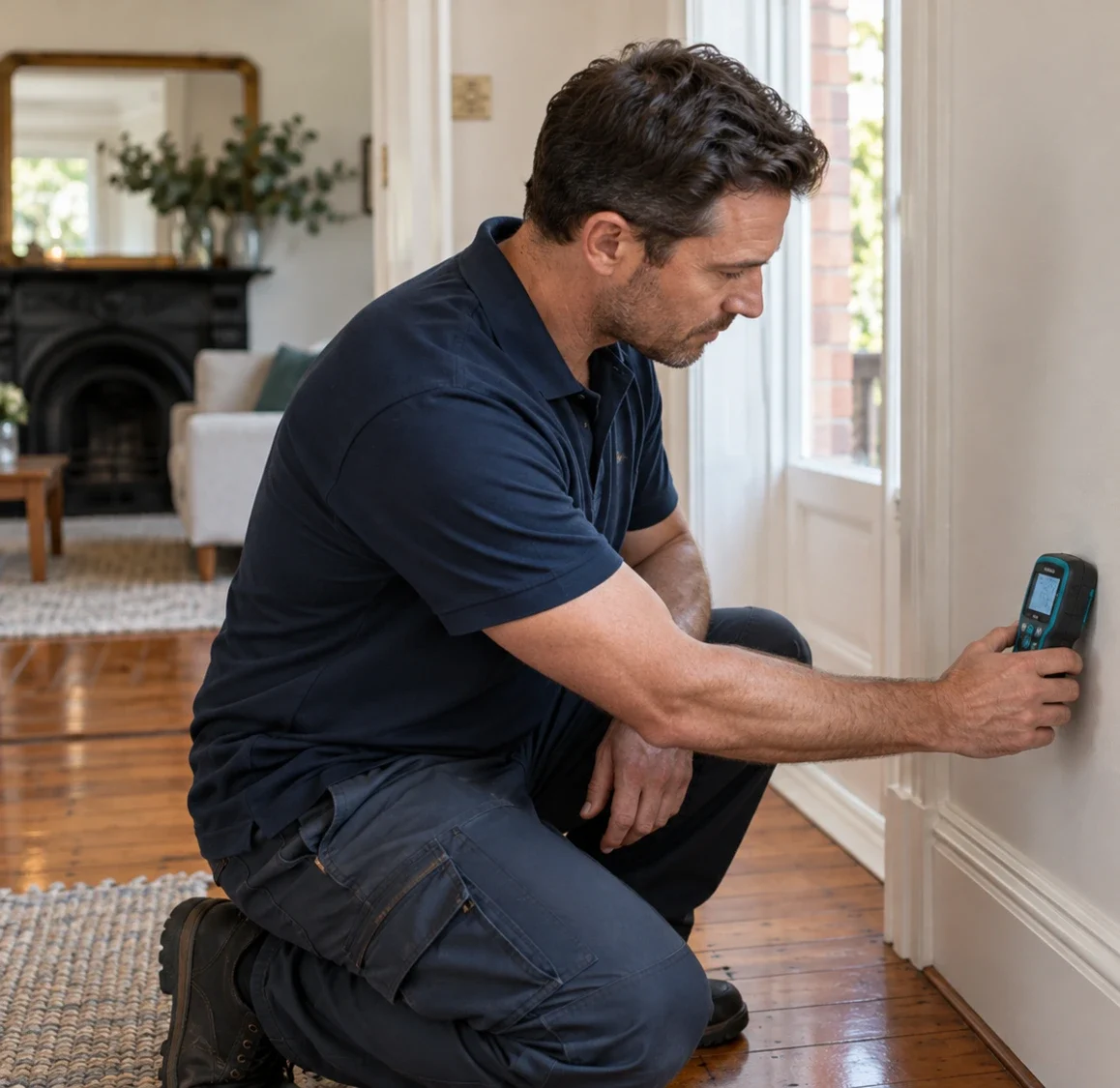
The inspection is visual and non-invasive. Inspectors examine the areas they can safely access within the agreed scope. They do not remove linings, lift floor coverings or carry out destructive testing. Tools such as moisture meters and laser levels help them examine what is visible more closely.
A building inspection is not a structural engineering assessment, a plumbing test or an electrical audit. Where a finding needs closer investigation, the report will usually recommend a specialist.
Buyers arrange a pre-purchase property inspection for a simple reason. Consumer Affairs Victoria notes that a qualified inspector can see past cosmetic improvements that may hide faults. The report then helps you weigh the property’s condition against its price and your plans for it.
Ripple’s building inspections and property inspections page explains how our reports categorise major defects, minor defects and maintenance items.
Which Property Inspections Should Buyers Consider?
Different inspections answer different questions. Their scope and timing are not interchangeable.
Pre-purchase building inspection
Purpose: Assess visible building defects and overall condition.
Typical timing: Before committing, subject to contract arrangements.
Timber pest inspection
Purpose: Assess evidence of timber pests and associated damage.
Typical timing: Before purchasing.
Specialist assessment
Purpose: Investigate a specific issue identified or suspected.
Typical timing: When recommended by an inspector or adviser.
Pre-settlement inspection
Purpose: Check the property's condition and agreed inclusions before settlement.
Typical timing: Shortly before settlement.
The first two inspections form the core of pre-purchase due diligence. Many buyers book them together as a combined building and timber pest inspection.
A specialist assessment comes later and only when needed. Examples include a structural engineer reviewing significant cracking, or a plumber investigating a suspected leak.
The pre-settlement inspection is often misunderstood. It is usually a buyer’s walk-through to confirm the property’s condition and that included items are still there. It is not a substitute for pre-purchase due diligence. By the time it happens, you have already signed the contract.
Our guide to the pre-settlement inspection and what buyers can and can’t do covers this final step in detail.
What Does a Pre-Purchase House Inspection Cover?
A pre-purchase house inspection examines the accessible parts of the property both inside and out. The exact scope depends on the property type, the agreed service and what can be safely reached on the day.
| Area | What inspectors commonly look at |
|---|---|
| Roof and roof space | Roof coverings, flashings, gutters and the accessible roof void |
| Interior | Walls, ceilings, floors, windows, doors and internal linings |
| Exterior | Cladding, brickwork, render and signs of deterioration |
| Subfloor and foundations | Stumps, footings, ventilation and moisture where accessible |
| Wet areas | Bathrooms, laundries and kitchens for signs of leaks or moisture damage |
| Outbuildings | Garages, sheds and other relevant structures |
| Site | Surface drainage, paths, fences and retaining walls where within scope |
Inspectors look for visible cracking, water damage, structural movement and deterioration beyond normal ageing. They also note safety hazards.
Why Consider a Combined Building and Timber Pest Inspection?
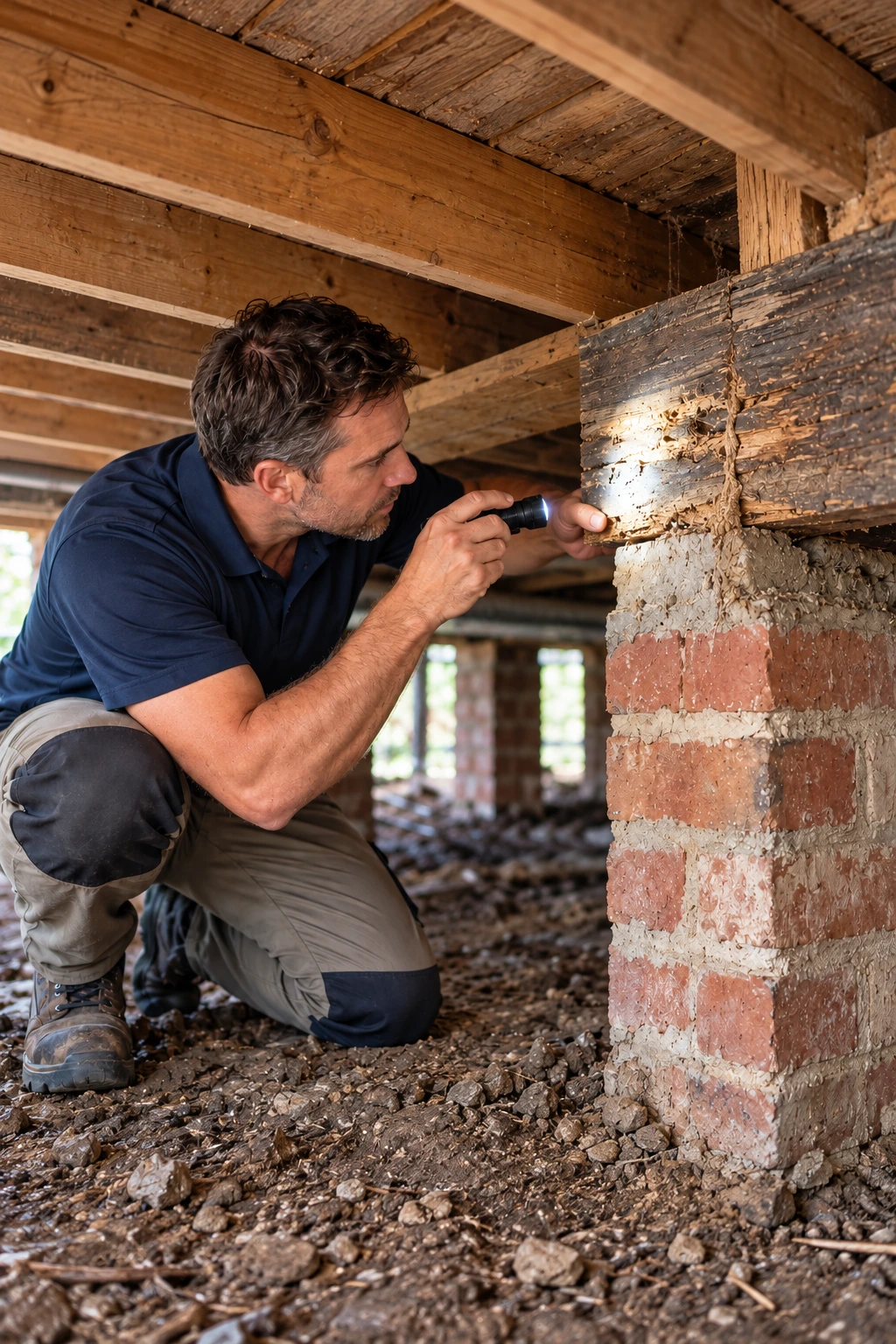
A building inspection and a timber pest inspection look at different risks. Combining them gives you a broader view of the property in one visit.
The building inspection focuses on structural and general condition. It covers cracking, movement, moisture damage, roofing problems and safety hazards.
The timber pest inspection is carried out in line with AS 4349.3. It is specific to pests that attack timber. It is not a general pest control service for insects, rodents or spiders. It looks for:
- Evidence of current or past termite activity.
- Damage caused by termites and other timber pests.
- Wood-boring insects, fungal decay (timber rot) and chemical delignification.
- Conditions that may encourage timber pest activity, such as poor subfloor ventilation, moisture build-up or timber in contact with soil.
Combined inspections are particularly useful for established homes with older timber framing, stumps or decks. A timber pest inspection cannot guarantee a property is free of termites. It reports on visible evidence and conducive conditions at the time of inspection.
Ripple’s pre-purchase building and timber pest inspection combines both assessments and documents findings with photographs.
How Do Building Codes Apply to Residential Inspections?
A pre-purchase inspection assesses a home's condition. It does not certify that the home complies with the current building code. Codes still shape the inspection, though. They explain why an older home is judged differently from a new one, which local risks apply and which records you should check before buying.
The rules behind a Victorian home
| Rule or standard | What it covers | Why it matters to buyers |
|---|---|---|
| National Construction Code (NCC) | National technical requirements for building work. Volume Two covers houses, garages and sheds. | Sets the benchmark for new work and recent renovations |
| Building Act 1993 (Vic) | Victorian law on building work, permits, practitioner registration and owner-builder sales | Governs permits, defect disclosure and legal time limits |
| Building Regulations 2018 (Vic) | Permits, mandatory inspections and land designations such as termite and bushfire risk | Determines which extra rules applied to a property |
| Australian Standards | Technical standards such as AS 4349.1 for pre-purchase inspections and AS 3660.1 for termite management | Define how inspections are carried out and how specific elements are built |
| Guide to Standards and Tolerances 2026 | Acceptable variation in building work, published by the Building and Plumbing Commission | Helps decide whether workmanship counts as defective |
The Building and Plumbing Commission (BPC), formerly the Victorian Building Authority, administers these rules in Victoria.
Which code applies to the home you are buying
The NCC is updated roughly every three years. Victoria adopted NCC 2025 on 1 May 2026. It applies to new building work designed after that date. Projects already underway could continue under the earlier rules.
That means most homes on the market were built to older codes. A 1960s weatherboard was never required to meet today's waterproofing or energy rules. AS 4349.1 reflects this. It compares a property with well-maintained buildings of a similar age and type, not with a brand-new home.
Condition versus compliance
For an established home, the inspector assesses condition. That covers deterioration, defects and safety hazards relative to the building's age.
For a new or recently built home, compliance becomes more relevant. The benchmarks are the NCC, the approved plans, Australian Standards and the building contract. The Guide to Standards and Tolerances 2026 took effect on 1 August 2026 and replaced the 2015 edition. It sets measurable limits for issues such as wall straightness and minor concrete cracking.
A pre-purchase inspector can still flag work that appears non-compliant or unsafe. Common examples include wet-area waterproofing failures, missing safety features and alterations that look unauthorised. Confirming compliance usually needs a specialist or a review of permit records.
Local designations that change the rules
Some land carries extra building requirements under the Building Regulations 2018. These designations affect what a property should have been built with.
- Termite risk areas. Parts of Greater Geelong are designated termite risk areas. New building work there must include termite management under AS 3660.1. That makes a timber pest inspection especially relevant.
- Bushfire prone areas. New homes in these areas must meet a Bushfire Attack Level under AS 3959. The seller must disclose the designation in the Section 32 statement.
- Flood-prone land. Overlays for land liable to flooding can affect floor levels and drainage.
- Reactive clay sites. Much of Geelong's growth corridor and Melbourne's west and south-east sit on reactive clay. AS 2870 classifies sites by expected ground movement. A soil report helps put any cracking in context.
Check permits and approvals before you buy
An inspector can point out work that looks unpermitted. Only the records can confirm it.
- Section 32 vendor statement. This should list building permits issued in the past seven years and any owner-builder insurance details.
- Council property information. Under regulation 51 of the Building Regulations 2018, councils can provide permits and certificates of final inspection from the past 10 years, current building notices or orders and land designations. Ask your conveyancer how to obtain it.
- Owner-builder homes. An owner-builder selling within six years and six months of completing work must provide a defects report under section 137B of the Building Act 1993. That report covers only the owner-built work. It does not replace a full pre-purchase inspection.
Consumer Affairs Victoria warns that illegal alterations may become your responsibility once you sign the contract.
Rights for newer homes
Every domestic building contract in Victoria includes statutory warranties under section 8 of the Domestic Building Contracts Act 1995. These include that work will be done in a proper and workmanlike manner and in line with the law. Under section 134 of the Building Act 1993, building actions generally must be brought within 10 years of the issue of the occupancy permit or the certificate of final inspection. If you are buying a home built in the last decade, ask your conveyancer whether any warranty rights pass to you.
What Is Included in a Pre-Purchase Inspection Report?
Your report is the record you will rely on when deciding whether to proceed. AS 4349.1 sets out what a pre-purchase building report should contain.
| Report element | What it tells you |
|---|---|
| Inspection details | Inspector, date, address and weather or site conditions on the day |
| Major defects | Defects that need fixing to avoid unsafe conditions, loss of utility or further deterioration |
| Minor defects | A general assessment of defects other than major defects |
| Safety hazards | Any present or imminent serious safety hazard |
| Limitations | Areas that could not be accessed and why |
| Recommendations | Where a specialist such as an engineer, plumber or electrician should investigate |
| Overall conclusion | How the property compares with similar buildings of its age |
A combined inspection gives you two assessments, each written to its own standard. The timber pest findings follow AS 4349.3.
Ripple's reports are delivered as a PDF, typically within 24 hours. Each finding includes high-resolution photographs, a severity rating and a practical recommendation. Your inspector also calls you to talk through the results before the report arrives.
When Should You Arrange a Building Inspection Before Buying?
Your options change once you sign a contract or win an auction. Get advice from a conveyancer or solicitor before signing anything.
Before a private sale
Where possible, arrange your inspection before you sign the contract of sale.
If time is short, Consumer Affairs Victoria notes that a private-sale offer can be made subject to conditions, such as a satisfactory building or timber-pest inspection. The condition must be agreed with the seller and set out in the contract. Your conveyancer can advise on wording and deadlines.
Private sales of residential property usually include a three-business-day cooling-off period. This has exceptions and costs, so it should not be relied on as a substitute for inspecting first.
Before an auction
Arrange your inspection before auction day. In Victoria, a successful auction purchase has no cooling-off period. You also cannot add conditions to the contract, such as a building inspection condition, unless the seller agrees. The cooling-off period also does not apply to private purchases made within three clear business days before or after a public auction.
An inspection report does not give you an automatic right to withdraw from a contract. Its value at auction comes from reading it before you decide whether to bid and how much.
Your Step-by-Step Property Inspection Journey
Here is how the inspection tasks fit together from first viewing to settlement.

Step 1: Inspect the property before making an offer
Your own viewing is the first filter. Look for cracking in walls and ceilings, damp patches, peeling paint, uneven or bouncy floors and doors that stick. Check wet areas for lifting tiles or mould.
Local housing stock also shapes what to watch for:
- Older Geelong homes in suburbs such as Newtown, Geelong West and Belmont can hide stumping problems, deteriorating subfloor timber and termite activity.
- Reactive clay soils across Geelong and Melbourne’s west and south-east can cause cracking and movement in walls and floors.
- Coastal homes on the Bellarine Peninsula and Surf Coast face salt corrosion of roof fixings and flashings, along with timber pest risk.
- Inner Melbourne terraces and apartments commonly show rising damp and failed balcony waterproofing.
- Homes built before 1990 may contain asbestos materials, often in eaves and wet areas.
These observations help you shortlist properties. They do not replace a professional inspection.
Step 2: Arrange an independent building and timber pest inspection
Book your inspection early enough to receive the report before any contract or auction deadline. Confirm the scope of the inspection, how access will be arranged with the agent and when the report will be delivered.
Ripple’s pre-purchase inspection service includes a phone call summarising the findings, with the written report typically delivered within 24 hours.
Step 3: Review your building inspection report
Start with the major defects and safety hazards. Then check the limitations and any specialist recommendations.
Step 4: Decide what to do about identified defects
Some findings need repair quotes or specialist advice before you can judge their impact. Discuss significant findings with your conveyancer before deciding how to proceed.
Step 5: Prepare for your pre-settlement inspection
Shortly before settlement, you can check the property’s condition and confirm included items are present.
What Happens if a Building Inspection Finds Problems?
Almost every report lists some defects. What matters is how serious they are. Findings generally fall into three groups:
- Maintenance items. Routine issues such as blocked gutters, worn sealant or minor paint deterioration.
- Defects requiring repair. Problems that need attention but are often manageable, such as a leaking tap or damaged flashings.
- Significant concerns. Findings that may affect structure, safety or cost and warrant further professional assessment.
Consider a hypothetical example. A report notes elevated moisture readings in the wall behind a shower, along with swollen skirting boards in the next room. This may point to a failed waterproofing membrane. The inspector cannot confirm the cause without invasive testing, so the report recommends investigation by a qualified plumber or waterproofing specialist. A repair quote then helps the buyer understand the likely cost.
Some buyers proceed as planned. Others seek a price adjustment or decide the property is not right for them. Your contractual options depend on how and when you bought, so check them with your conveyancer.
How Much Does a Building Inspection Cost in Victoria?
Inspection costs depend on the service you choose and the property itself. Ripple publishes fixed-from pricing, with all prices including GST and no call-out fees.
| Ripple service | What it covers | Report turnaround | From (incl. GST) |
|---|---|---|---|
| Pre-purchase building and timber pest inspection | Combined assessment under AS 4349.1 and AS 4349.3 | Within 24 hours | $400 |
| Building inspection | Building condition only under AS 4349.1 | Within 24 hours | $300 |
| Timber pest inspection | Termites, borers, fungal decay and conducive conditions | Within 24 hours | $300 |
The final price depends on factors such as these:
| Factor | How it can affect the quote |
|---|---|
| Property size and type | Larger homes, multi-dwelling sites and extensively renovated homes take more time on site |
| Location | Properties outside the standard service area may attract a travel fee, quoted upfront |
| Access | Difficult roof space or subfloor access can extend the inspection |
| Scope | Additional services or specialist requirements are quoted separately |
See current prices and service areas on Ripple’s Region and Prices page.
Why Choose Ripple Building Inspections?
Ripple Building Inspections has completed more than 8,000 building inspections across Geelong and Melbourne. Our inspectors are former and current registered builders. They bring years of hands-on construction experience to every property they assess.Ripple Building Inspections has completed more than 8,000 building inspections across Geelong and Melbourne. Our inspectors are former and current registered builders. They bring years of hands-on construction experience to every property they assess.
Local expertise across Greater Geelong
Geelong is where much of our work begins. Our inspectors know the region’s housing stock, from Victorian weatherboards in Newtown to new estates in Armstrong Creek and Mount Duneed. They also know where those homes tend to fail. Older properties often hide stumping issues, termite activity and asbestos cement in eaves and wet areas. Reactive clay soils can cause cracking and movement across the region.
We inspect throughout Greater Geelong, the Bellarine Peninsula, the Surf Coast, Golden Plains, the Otway Ranges and Moorabool Shire. That includes Geelong West, Highton, Belmont, Lara, Corio, Ocean Grove, Torquay, Grovedale and Waurn Ponds. View our Geelong building and timber pest inspection page for full coverage.
Credentials buyers can check
- Registered practitioners. Our inspectors are registered building practitioners and members of Master Builders Victoria.
- Fully insured. Every inspection is covered by professional indemnity and public liability insurance, as recommended by Consumer Affairs Victoria.
- Independent. We have no ties to real estate agents, builders or developers.
- Standards-based. Building inspections follow AS 4349.1, and timber pest inspections follow AS 4349.3.
- Professional equipment. Thermal imaging cameras, moisture meters, termite detection devices and laser levels support each visual inspection.
Reports you can act on quickly
After the inspection, your inspector calls you to explain the findings. The written report typically follows within 24 hours. It uses plain language, high-resolution photographs and clear severity ratings, so you can share it straight away with your conveyancer or solicitor.
We also inspect across Melbourne’s north, west, south-east and inner suburbs, as well as Ballarat. To request a quote or book a pre-purchase building and timber pest inspection, visit our pre-purchase building and timber pest inspection page.

Buying a Property in Geelong or Melbourne?
Speak With Ripple Building Inspections
An independent inspection helps you understand a property’s visible condition and potential risks before you commit.
Ripple Building Inspections carries out pre-purchase building and timber pest inspections across Greater Geelong, the Bellarine Peninsula, the Surf Coast and Melbourne’s metropolitan suburbs. Our registered building practitioners assess every accessible area and explain the findings in a photographic report written in plain language. We also call you after the inspection so you can ask questions straight away.