Quick answer: Asbestos is likely present in any Australian house built or renovated prior to 1990. Left undisturbed and in good condition, asbestos-containing materials pose little risk. The danger starts when a power tool hits them, releasing asbestos fibres you cannot see or smell. Victoria also sets strict legal limits on what a homeowner can remove. Find asbestos before renovation work starts, not after.
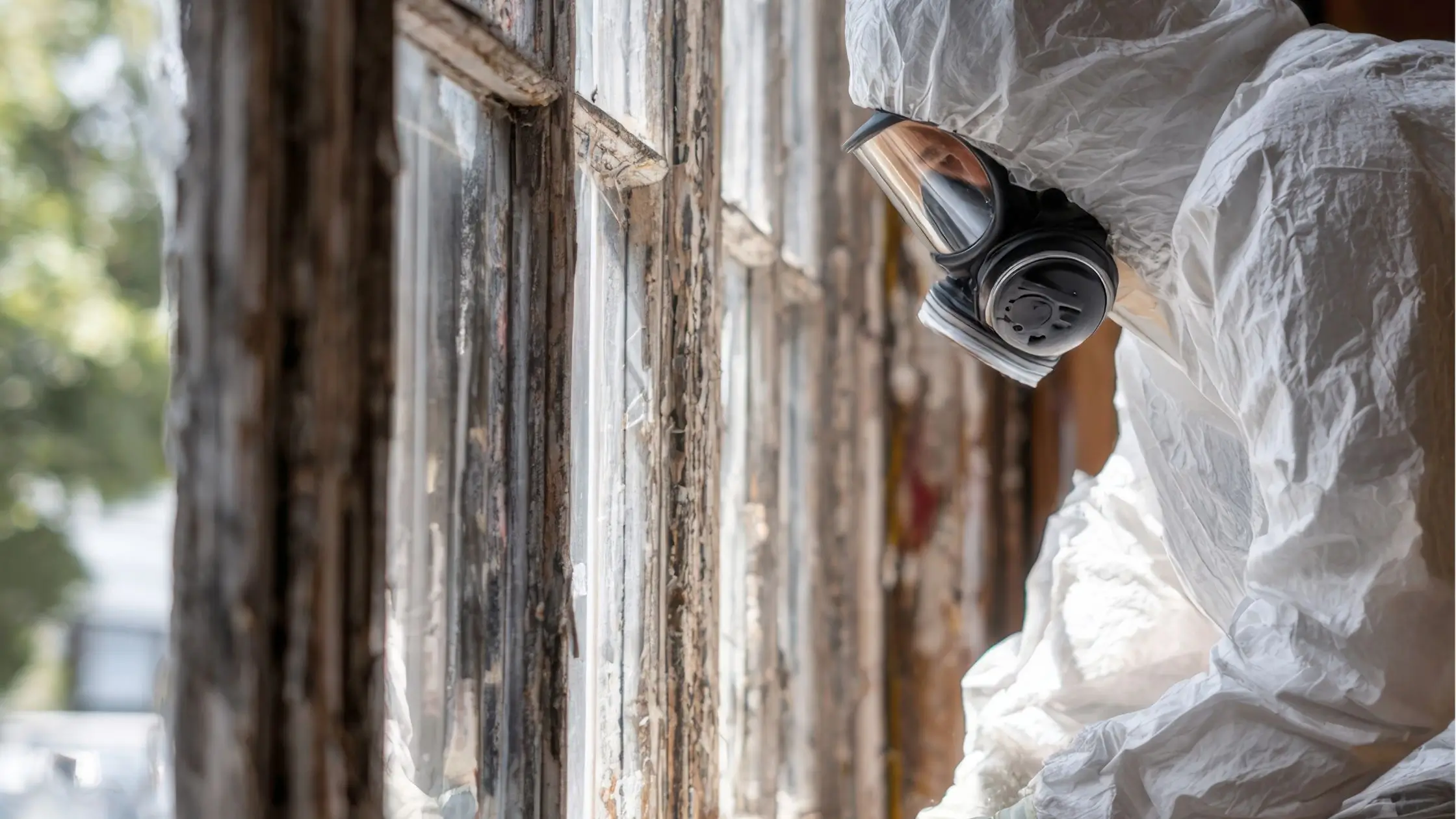
Table of Contents
There is a moment in almost every renovation where someone reaches for a power tool without thinking twice. A grinder through an old bathroom wall. A quick sanding back of the shed before painting. In a house built in 1972, either one can put asbestos fibres into the air your family breathes for the rest of the day.
This is not a rare scenario. Research published in the Medical Journal of Australia found that 61.4% of do-it-yourself home renovators reported exposure to asbestos during their work. Worse, 39.3% said their partner had been exposed too, and 22.8% said their children had been. Only 12% regularly wore respiratory protection.
The good news is that asbestos is manageable. It is not a reason to abandon a renovation. It is a reason to know what your walls are made of before you open them.
Key Takeaways:
- If your house was built or renovated prior to 1990, assume asbestos is present until testing proves otherwise.
- Asbestos-containing materials in good condition and left alone pose little risk. The danger begins when something disturbs them.
- A power tool can turn a stable, non-friable sheet into airborne asbestos fibres within seconds.
- Victoria caps unlicensed asbestos removal at 10 square metres of non-friable material. Friable asbestos always needs a licensed asbestos removalist.
- Asbestos waste cannot go in a kerbside bin or a standard skip. Double wrap it, label it, and take it to an EPA-authorised landfill.
- Finding asbestos before demolition costs far less than an uncontrolled exposure event.
Why Asbestos Is Still a Live Issue in Australian Homes
Australia was one of the highest per capita users of asbestos products in the world. More than 3,000 asbestos-containing products were made and used here. Most were building products, according to the Asbestos and Silica Safety and Eradication Agency, the Australian Government body responsible for national asbestos management.
Manufacture wound down through the 1980s. The Australian Government then banned all asbestos-containing products from 31 December 2003. A ban stops new material entering the country. It does nothing about the material already nailed to several million houses. The Asbestos Education Committee estimates one in three Australian homes still contains asbestos today.
A rough guide to the age of your house:
- Built before 1980: asbestos building materials are almost certainly present somewhere.
- Built 1980 to 1990: asbestos is likely, particularly in wet areas, eaves and sheds.
- Built after 1990: unlikely in the original construction, though later additions are worth checking.
The build date alone will not tell you enough. A 1920s weatherboard cottage in Geelong West might carry no asbestos in its original fabric and plenty in its 1978 bathroom extension. Our guide to what inspectors look for in a home inspection explains how an inspector reads building materials and their condition.
Where Asbestos Is Commonly Found During Renovations
Builders used asbestos because it was cheap, fire-resistant and durable, which is why it ended up in so many parts of a house. The table below shows where it turns up, and the task most likely to disturb each one.
|
Area of the Home |
Likely Asbestos Materials |
Type |
Task That Disturbs It |
|
Exterior walls |
Fibro sheeting and cladding |
Non friable |
Drilling, sanding, high pressure washing |
|
Bathroom, kitchen, laundry |
Sheeting behind wall tiles and splashbacks |
Non friable |
Demolition, tile removal |
|
Roof and eaves |
Corrugated roofing, eave and gable lining |
Non friable |
Cutting, cleaning, replacement |
|
Flooring |
Vinyl tiles, lino backing, adhesives |
Non friable |
Lifting, scraping, sanding |
|
Heating and hot water |
Pipe lagging and flue insulation |
Friable |
Any disturbance at all |
|
Sheds, fences, garages |
Fence sheeting, shed walls and roofing |
Non friable |
Demolition, replacement |
Fibro sheeting is the one to watch; it was the largest single source of exposure in the MJA study, accounting for 96.4% of reported cases. Asbestos is also rarely labelled, and asbestos cement looks almost identical to ordinary cement sheet. Condition matters as much as presence too. A sound, painted asbestos wall sheet is a very different proposition to the same sheet cracked and crumbling.
Friable and Non-Friable Asbestos, and Why the Difference Matters
1. Structural Elements
The inspector starts with the bones of the house. This means checking foundations, load-bearing walls, columns, beams, and floor structures. They look for cracks, movement, sagging, and any signs the building has shifted since it was built. The goal is to confirm the property is structurally sound. Major structural defects are the most expensive problems to fix. A cracked slab or failing foundation can cost tens of thousands to remediate, which is why this section of the property inspection report matters most.2. Roof and Roofing Systems
The roof is checked from inside the roof void and, where safe, from outside. Inspectors look at tiles, metal sheeting, flashing, gutters, downpipes, and any visible signs of leaks or water staining. They also assess the roof frame itself. Sagging trusses, timber rot, and poor bracing all get flagged. A roof replacement is one of the more expensive repair jobs a homeowner faces, so knowing its condition before you buy protects your budget.3. Interior Spaces
Every accessible room gets a walkthrough. Inspectors check ceilings for water stains, walls for cracks or bulging, floors for slope or movement, and door and window frames for square alignment. Wet areas get extra attention. Bathrooms, laundries, and kitchens are the most common source of hidden water damage. Inspectors use moisture meters to detect dampness behind tiles and under floor coverings before it becomes visible.4. Exterior and Site Drainage
The outside of the property tells a story. Cladding, brickwork, render, paint, and window seals all get inspected for damage or deterioration. Retaining walls, fences, driveways, and paths are also checked. Site drainage issues are a big one. Poor surface drainage causes water to pool near foundations, which leads to subsidence, dampness, and eventually structural problems. This is one of the most common major defects that Archicentre inspectors find during pre-purchase inspections.5. Sub-Floor and Roof Void Areas
These hidden spaces reveal what the polished interior can hide. In the sub-floor, inspectors check for moisture, poor ventilation, damaged stumps or piers, and evidence of termite activity. In the roof void, they look at insulation, timber condition, wiring, and any signs of water ingress. Access matters here. If the inspector cannot safely reach these areas, they must state this in the report. Buyers should push for full access wherever possible, as these are the spaces where potential issues hide the longest.6. Plumbing, Electrical, and Safety Hazards
A building inspection is not a full plumbing or electrical audit, but the inspector flags visible safety hazards. This includes exposed wiring, missing smoke alarms, loose handrails, unsafe balustrades, and any obvious non-compliance with current building codes. Older properties often have safety issues that would fail a modern build. These findings help buyers plan for upgrade costs before they take ownership.7. Timber Pest Activity
If you booked a building and pest inspection, the timber pest component follows Australian Standard AS4349.3. Pest inspectors look for subterranean termites, wood-boring insects, fungal decay, and chemical delignification. Other pests, such as wood borers and fungal decay, are also documented. They also check for conditions that attract pests, such as timber-to-soil contact, poor drainage near foundations, and untreated timber in high-moisture areas. Given that termite damage costs Australian homeowners an estimated $1.5 billion each year, the pest inspection report often pays for itself many times over. Note that a pest report focuses on identifying activity, damage, and conditions. It does not include pest control treatment, which is a separate service performed by licensed pest control operators.How Asbestos Exposure Affects Your Health
Asbestos fibres are microscopic. You breathe them deep into your lungs, where the body cannot break them down or clear them. They stay there. Asbestos-related diseases usually appear 20 to 50 years after exposure. That delay is exactly why the risk feels so easy to dismiss on the day.
Malignant mesothelioma is the best known of these, a cancer of the lining of the lungs or abdomen. Exposure to asbestos also causes lung cancer, asbestosis and pleural disease. The Australian Institute of Health and Welfare and the Australian Mesothelioma Registry recorded 688 mesothelioma deaths in Australia in 2023.
Where that exposure comes from has changed. Mesothelioma used to be a disease of occupational exposure among miners and shipyard workers. Not anymore. Of the mesothelioma patients assessed by the Australian Mesothelioma Registry, 89% reported possible or probable non-occupational exposure. Within that group, 51% were exposed during major home renovations. Another 38% simply lived in their homes while they were being renovated.
Read that second figure again. You do not have to be the person holding the tool. Living in the same home while working is enough. So is hugging a parent who has walked inside in dusty clothes. That is why children appear in the MJA exposure data, and why controlling dust matters as much as protecting the worker.
The Rules in Victoria: What You Can and Cannot Legally Do
Renovating in Victoria carries legal obligations that are stricter than most homeowners assume.
The 10 Square Metre Limit
Victoria allows unlicensed asbestos removal only where the non-friable material stays under 10 square meters in total. The work also has to stay under one hour across any seven-day period. That hour counts everyone on the job rather than each person separately. Removal of asbestos-contaminated dust is capped at 10 minutes.
Ten square metres is roughly the area of one small bathroom wall. Most kitchen or bathroom renovations in a pre 1990 house will go past it.
Licensed Removal
Past those limits, you need a licensed asbestos removalist. A Class B licence covers non-friable asbestos. A Class A licence covers friable asbestos and contaminated dust, and any friable work needs one regardless of quantity. Licensed removalists must notify WorkSafe Victoria before most removal work starts.
If You Are Engaging a Tradesperson
Any tradesperson working on your renovation has duties under Victorian occupational health and safety law. They must identify asbestos and comply with the removal requirements. Ask whether they have checked before the first tool comes out. A trade who shrugs the question off is a warning sign.
Owner builders carry their own reporting obligations when they later sell. Our guide to owner builder Section 137B reports explains what is required and when.
How to Package and Dispose of Asbestos Waste
Disposal trips up more renovators than removal does.
Keep asbestos waste damp until you package it, then wrap it in two layers of 0.2 mm polythene sheeting. Fill bags no more than halfway so they seal without splitting. Every package needs a clear asbestos warning label. Those packaging requirements are not optional, and landfills will refuse a load if they are not met.
EPA Victoria then requires that asbestos waste goes only to a landfill authorised to receive it. Not every tip is, and even an authorised site can refuse a load.
Asbestos never goes in a kerbside bin or a standard skip, and it cannot go into general demolition rubble. Illegal dumping is prosecuted, and the penalties are substantial.
Where to Take Asbestos Waste in Geelong and Melbourne
The packaging rules are statewide. Where you can actually drop the waste is local, and this is the step that costs renovators a day they did not budget for.
In Geelong, domestic asbestos goes to Drysdale Landfill, and only by appointment. You ring ahead on the day; the load is capped at roughly a six-by-four trailer, and a fee applies per load. You also unload it yourself at the tip face, so the packaging has to withstand handling rather than tipping. The City of Greater Geelong asbestos disposal page carries the current booking number and fee.
Melbourne works differently. There is no single metropolitan site, acceptance changes from council to council, and several of the places that take household asbestos are privately run transfer stations rather than council tips. Some take it only on set days. Sort this out before the wall comes down, because a load with nowhere to go sits on your driveway. The Australian Government’s asbestos disposal facility finder lists sites with their hours, quantity caps, fees, and whether they require notice.
One habit saves the whole trip on either side of the bay. Ring the site, describe what you are bringing and how it is wrapped, and confirm the price before you load the trailer.
What to Do Before You Start Renovating
A sensible sequence for any renovation on an older house:
- Establish the age of the house and its additions. Council records or the original plans will date the work.
- Get a professional assessment before you touch anything. Finding asbestos-containing materials takes someone who knows the era and the products.
- Test through a NATA-accredited laboratory. Sampling is the only way to confirm what a material contains. Have it done safely rather than snapping a piece off yourself.
- Decide whether to manage it in place or remove it. Material in good condition that you will not touch can often be sealed and left alone. That is a legitimate asbestos management outcome.
- Engage a licensed asbestos removalist for anything friable, anything over 10 square metres, or anything you are unsure about.
- Plan disposal before demolition day, not after the pile is already on the driveway.
- Arrange clearance before other trades come back to the site.
Minor works within legal limits still require proper personal protective equipment. A correctly fitted P2 respirator is the minimum, along with disposable coveralls and eye protection. A standard dust mask will not stop asbestos fibres. Keep the family away from the work area, especially children.
When to Book a Building and Pest Inspection like Ripple
An inspection is worth arranging in a few specific situations:
- Before buying a pre 1990 property. A building and pest inspection tells you what you are buying, including the era and condition of the building materials you will eventually renovate.
- Before structural work. Removing a wall or opening a ceiling is when hidden materials get disturbed.
- After storm or fire damage, where sheeting may already be broken.
- When a neighbour is demolishing. An dilapidation report records your home’s condition before their demolition starts.
Renovate With Confidence: Know What Is in Your Walls First
Asbestos in home renovations is not a reason to leave your plans in a drawer. Thousands of Victorian homes get renovated safely every year, and the ones that go well have something in common. Somebody found out what the building was made of before the first wall came down.
The precautions are not complicated. Know the age of your house. Assume asbestos until testing says otherwise. Never take a power tool to a material you have not identified. None of that costs much next to the alternative, which is a risk your family carries for decades.
If you are not certain what you are working with, start with an inspection across Geelong and Melbourne. Get in touch with Ripple Building Inspections to book, and go into your renovation knowing exactly what your house is made of.
FAQs about Asbestos and Building Renovations
Vendors in Victoria have disclosure obligations around known material defects, and buyers arrange their own inspections anyway. A pre-sale inspection lets you address issues before they surface during a campaign.
It depends on the size, age and location of the property. Set against a licensed removal you could have planned for, it is a small line item. Our page on building and pest inspection costs across Melbourne and Geelong sets out current pricing.