Found Defects? How to Negotiate After a Building Inspection
Quick answer: Yes, you can negotiate after a building inspection in Victoria. A report can support a request for a lower price, seller-funded repairs or more time to investigate, but the seller does not have to agree. You can only pull out of a signed contract with a valid legal basis, such as an activated building inspection condition, an eligible three-business-day cooling-off right or the seller’s agreement. Auction purchases are generally unconditional, so inspect before you bid.
Key Takeaways
- Severity beats volume. Negotiate on safety, structural, water-entry and timber pest findings, not general wear.
- Evidence wins. Written quotations and specialist reports carry far more weight than estimates from the internet.
- Your contract sets your fallback. Whether you have signed and whether an inspection condition or cooling-off right applies determines what happens if the seller says no.
- Inspection conditions are optional. Clauses such as GC21 only apply if selected, and deadlines and practitioner requirements vary by contract version.
- Auctions are different. Inspect before bidding and adjust your limit, because there is no cooling-off after a successful bid.
- Geelong properties need extra checks. Confirm overlays such as the SBO and Heritage Overlay through VicPlan, and never assume soil classification from the suburb.
- A discount is not always enough. If the risk cannot be measured, walking away may be the better decision, where you have a valid right to.
Your building inspection found defects. What happens next?
Table of Contents
Can you negotiate after a building inspection in Victoria?
Yes, you can always ask. But a negotiation is an agreement between two parties. An inspection report gives you evidence, not leverage the seller must accept.
What changes is your fallback if the seller says no. That depends on whether a binding contract already exists. Under Consumer Affairs Victoria guidance, a property is sold once both buyer and seller have signed the contract of sale. Verbal offers do not create a binding contract.
Private sale, before signing. You have the most freedom. You can revise your offer, ask for a building inspection condition or walk away. The seller can also refuse your revised offer or accept another buyer.
From the forums: In a PropertyChat thread on Victorian offers subject to building and pest inspection, Melbourne buyers debated the trade-off. Some pointed out that a condition can make an offer less attractive than an unconditional one at a similar price. Others noted that private sale buyers still have the three-business-day cooling-off right. The discussion is a useful reminder that how you protect yourself can affect how competitive your offer looks.
Private sale, signed with a building inspection condition. You may have a limited right to end the contract if the clause’s requirements are met. That right can encourage a seller to discuss a price adjustment, but it does not oblige them to.
Signed without an inspection condition. You can still ask for a reduction or repairs. If the seller refuses, you may be legally bound to proceed unless another right applies, such as an eligible cooling-off period.
Before auction. You can adjust your bidding limit or, if the seller agrees to consider pre-auction offers, propose a conditional offer.
After a successful auction bid. Consumer Affairs Victoria states you will be offered the contract on the terms displayed before the auction, with no cooling-off period. Any change requires the seller’s agreement.

| Purchase Situation | Negotiation Opportunity | Key Limitation |
|---|---|---|
| Before signing | Buyer may revise an offer | Seller may refuse |
| Signed with an inspection condition | Negotiation may be possible | Contract determines withdrawal rights |
| Signed without an inspection condition | Parties can agree to changes | Buyer may remain legally bound |
| Before auction | Negotiate or adjust bidding limit | Check proposed contract |
| After a successful auction bid | Only by agreement or other applicable legal grounds | Usually unconditional |
Note: Negotiation options depend on the contract terms and stage of the sale. Seek advice from your conveyancer or solicitor before making a decision.
Use the table to locate yourself, then the decision tree below to see your realistic options. Have your conveyancer confirm where you sit before you make any proposal to the seller.
“Near an auction” means bought at auction or within three clear business days before or after one, when cooling off does not apply. Each outcome is a starting point for a conversation with your conveyancer, not a legal conclusion.
Which building defects are worth negotiating over?
The number of items in a report matters far less than what they mean. A report listing 40 minor maintenance items can describe a sound home. A report with three findings can describe a property with a serious structural or moisture problem.
An independent building inspection should help you answer four questions for each finding:
Severity
Does it affect safety, structure or weathertightness?
Cause
Is the cause known, or only the symptom?
Repair complexity
Is the fix defined, or does it need investigation first?
Future implications
Will it get worse, spread or affect other building elements?
Age-related wear, such as tired paint or worn carpet, is usually reflected in the asking price already. Sellers rarely accept requests for discounts based on items any buyer could see at an open inspection.
Structural movement and foundation defects
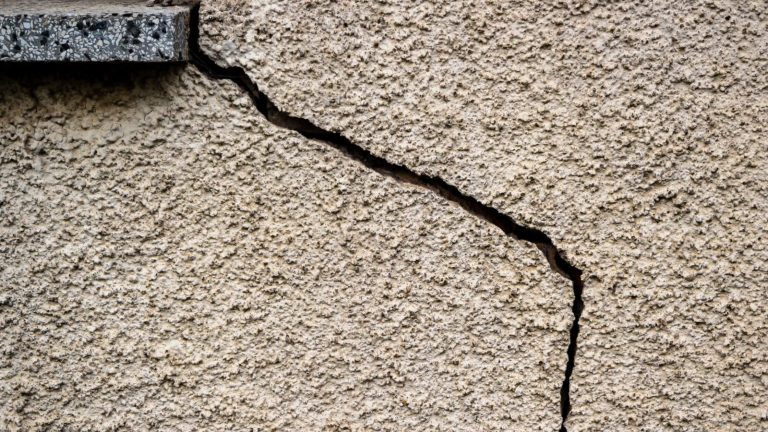
Significant cracking, sticking doors, uneven floors, failed or rotted stumps and damaged load-bearing components can indicate foundation or structural movement.
A building inspector reports what they observe: crack widths, locations, out-of-level floors and signs of movement. They do not determine the structural cause or design the fix. That is the role of a structural engineer.
Where movement is significant, an engineer's assessment usually provides far stronger negotiating evidence than a builder's patch-and-paint quote.
Water damage and failed waterproofing
Damp subfloors, leaking showers, water stains, rising damp, blocked or failed drainage and moisture-related timber decay are common findings in established homes.
A defined repair scope requires the source to be identified first, sometimes by a plumber, waterproofing specialist, or leak detection service.
Termite activity and timber deterioration
Timber pest findings fall into three categories, and they carry different weight:
Active termite activity
Live termites found during the inspection. This usually calls for urgent specialist treatment advice.
Previous damage or activity
Evidence of past termites. The question becomes whether the structure was repaired and whether a management system is in place.
Conducive conditions
Conditions that make future activity more likely, such as poor subfloor ventilation, timber in contact with soil or leaking pipes.
Where the report identifies termite damage to structural timbers, a specialist timber pest assessment and, if needed, an engineer's review of the affected members should precede any price discussion.
Roof damage and weatherproofing failures
Cracked or slipped tiles, deteriorated ridge pointing, corroded roof sheeting, failed flashings and blocked or rusted gutters can let water into the roof space and walls.
Visible roof defects can hide concealed damage to battens, sarking, ceilings and insulation. Restricted roof-space access is a common inspection limitation, so check the report's limitations section before assuming the roof was fully assessed.
Safety and potentially unauthorised building work
Unsafe stairs, loose or low balustrades, defective pool or spa barriers and electrical hazards flagged for specialist review all deserve priority. Safety items are often the easiest to justify in a negotiation because they need attention regardless of budget.
For pools and spas, a pool barrier safety inspection is a separate assessment from a pre-purchase inspection.
Extensions, decks, carports or converted spaces with no visible permit history should be checked. Undocumented does not automatically mean illegal: some minor works are exempt, and some approvals are simply not provided in the contract documents. A permit search through the council or relevant building surveyor answers the question.
From inspection findings to negotiation
Defect severity and negotiation evidence
Use this table to sort your report's findings. Each row moves from what was observed, to what it could mean, to the evidence you need before making a proposal.
| Inspection finding | Potential consequence | Further evidence required | Possible negotiation response |
|---|---|---|---|
| Stepped cracking over 5 mm in brickwork | Ongoing footing movement; possible underpinning | Structural engineer's assessment of cause and repair method | Seek time to investigate; negotiate once a scope exists |
| Several failed or rotted timber stumps | Uneven floors; progressive subfloor movement | Restumping contractor's quote after subfloor assessment | Price review supported by quotation |
| Elevated moisture readings around shower walls | Failed waterproofing; concealed framing or floor damage | Waterproofing specialist or plumber investigation | Price review allowing for concealed damage |
| Active termites in subfloor timbers | Structural timber damage; treatment costs | Timber pest specialist assessment; engineer if structural members affected | Investigate before deciding; possible reconsideration |
| Corroded roof sheeting and failed flashings | Water entry to roof space and ceilings | Roofer's quotation; roof-space inspection if access was limited | Agreed repairs or price review |
| Balustrade below safe height or loose | Fall risk | Builder's quotation; permit check if recently installed | Request repair before settlement or price adjustment |
| Rear extension with no permit history found | Possible compliance or insurance issues | Council permit search; building surveyor advice | Clarify before negotiating; legal advice on contract position |
| Peeling paint, worn floor coverings | Cosmetic deterioration | None usually needed | Generally not grounds for negotiation |
Swipe horizontally to view all table columns.
Severity is about consequence, not price.
A defect is not "major" just because it is expensive. Repainting a whole house costs real money but is cosmetic. A small crack in a structural beam may be cheap to access but significant. Severity is about consequence, not price.
What Australian building standards say about residential defects
Australian Standards and the National Construction Code (NCC) give technical context to inspection findings. They do not turn a pre-purchase report into a compliance certificate.
A pre-purchase inspection under AS 4349.1 is a visual, non-invasive assessment of a building's condition at the time of inspection. It compares the building with one of similar age and type that has been reasonably maintained. It is not a check on whether every element met the building code at the time of construction, and it is not a structural engineering investigation.
That distinction matters in negotiation. "The report found a defect" is a strong position. "The house breaches the building code" is a claim that requires the applicable code edition, the construction date, and usually a building surveyor's or engineer's opinion to support it.
Standards and regulations that may be relevant
Use this table to see which technical documents may relate to a finding, and what each one can and cannot tell you.
| Standard or regulation | Relevant to | What it means for a buyer |
|---|---|---|
| AS 4349.1-2007, Inspection of buildings: Pre-purchase inspections, Residential buildings | Pre-purchase residential inspections | Sets the scope and reporting requirements for a standard pre-purchase inspection. Limited to visible, accessible areas; no invasive testing. |
| AS 4349.3, Timber pest inspections | Termites, borers and fungal decay | Covers specialist timber pest inspections, including conducive conditions and the limits of a visual inspection. |
| NCC 2025, Volume Two | Residential (Class 1 and 10) construction | Applies to new building work approved under it. Does not retrospectively apply to existing homes. |
| ABCB Housing Provisions Part 4.2 and AS 2870 | Footings, slabs and site classification | Explain how footing design relates to soil reactivity. Movement assessment needs an engineer, not a visual inspection alone. |
| ABCB Housing Provisions Part 10.2 and AS 3740 | Wet area waterproofing | Set requirements for shower and bathroom waterproofing in new work. Useful context when assessing failed waterproofing. |
| Building Act 1993 and Building Regulations 2018 | Victorian building regulation | Give legal effect to the NCC in Victoria and govern permits, inspections and owner-builder obligations. |
| Guide to Standards and Tolerances 2026 | Domestic building workmanship | A recognised benchmark for workmanship tolerances. Not legislation, and not retrospective. |
Which edition applies?
In Victoria, the Building Act 1993 and Building Regulations 2018 give legal effect to the NCC. NCC 2025 was adopted in Victoria from 1 May 2026, according to the Building and Plumbing Commission. Transitional arrangements allow some projects whose design was substantially progressed before that date to proceed under NCC 2022.
The Guide to Standards and Tolerances 2026 commenced on 1 August 2026. The BPC states it applies prospectively and does not apply to contracts entered into or work commenced before that date. The BPC also states the Guide is not legislation and should not be used to decide whether work complies with regulatory requirements.
A practical comparison
A bathroom built in 1995 cannot automatically be assessed against every requirement that applies to a new bathroom in 2026. Waterproofing requirements for wet areas, now set out in Part 10.2 of the ABCB Housing Provisions or AS 3740, have changed since then.
That does not make the 1995 bathroom irrelevant. Existing water damage, a failed membrane or an unsafe condition still affects repair costs and risk. The negotiation point is not "this bathroom doesn't meet 2026 standards". It is "this bathroom is leaking now, and here is what it will cost to fix properly".
The same applies to structural movement. AS 2870 explains why soil classification and footing design matter, but whether a particular house's footings were adequate when built is a question for a structural engineer with access to the site classification and original documents.
Before you put a code-breach argument to a seller, confirm three things: the date the work was done, the code edition that applied at that time and a qualified professional's view that the work fell short. Without all three, stick to the observed condition and its repair cost.
Building defects that deserve extra attention in Geelong

Foundation movement and changing soil moisture
Foundation movement is most often linked to changing moisture in the soil beneath footings. The Building and Plumbing Commission lists the main contributors: seasonal wetting and drying of reactive clays, poor surface drainage, leaking pipes or gutters, and tree roots drawing moisture from under the house.
AS 2870 classifies sites by how much the soil is expected to move, from Class A (little or no movement) through S, M, H1, H2 and E (extremely reactive), plus Class P for problem sites. Footings for newer homes are designed to the site’s classification.
Soil conditions can change from one street to the next. Never assume a property’s classification from its suburb. For homes built in recent decades, the soil report is usually included in the building permit documents. For older homes, an engineer may need to assess the site directly if movement is significant.
Drainage problems and flood-related property constraints
An inspection may find water pooling against walls, garden beds built up above floor level, missing downpipe connections or a damp subfloor. These are building or maintenance defects, and they can usually be fixed.
A mapped flood control is different. The City of Greater Geelong applies a Special Building Overlay (SBO) to land identified as subject to overland stormwater flooding. Council states that a planning permit is generally required for buildings and works in the SBO, and it provides flood advice on request, including flood levels and required floor levels. Riverine and coastal flooding, covered by overlays such as the Land Subject to Inundation Overlay, is handled by the Corangamite Catchment Management Authority.
Keep three things separate when assessing a property:
- A building defect discovered by inspection, such as failed drainage. It usually has a repair cost you can quote and negotiate.
- A mapped flood or planning constraint, such as an SBO. It cannot be repaired away. It may affect insurance and your risk tolerance.
- A future development limitation. An overlay may restrict an extension, a second dwelling or required floor levels for new work. That affects what you can do later, not the current condition.
An inspection report covers only the first. The other two come from the property’s planning information and council advice.
Coastal exposure and material deterioration
Properties on the Bellarine Peninsula and along Corio Bay can be exposed to salt-laden air. Salt accelerates corrosion of exposed metal: roof sheeting and fixings, gutters, flashings, steel lintels, balustrade fixings and outdoor fittings.
Inspectors pay attention to corrosion staining, lifting fixings and rusted lintels above windows, which can crack surrounding brickwork. None of this means a coastal property is defective. It means maintenance history matters, and corrosion findings deserve an assessment by a roofer or builder before you price them.
Older homes, renovations and heritage constraints
Older weatherboard and masonry homes often need closer checks of subfloor ventilation, stumps, roof coverings and the junctions between original structures and later additions. Extensions built decades apart can move differently and leak at the join.
Many older Geelong properties sit within a Heritage Overlay. Under the Greater Geelong Planning Scheme, a planning permit is required to demolish or partly demolish a heritage place, and external buildings and works generally require a permit too. Some places also have external paint controls. Repairs that change materials or appearance, such as replacing a roof with a different profile or removing deteriorated original features, may take longer and cost more as a result.
Before negotiating over a Geelong property’s defects, check:
- The building inspection findings and the report’s stated limitations.
- Relevant specialist assessments: structural engineer, timber pest, plumber or roofer.
- Permit and renovation records for any extensions or alterations.
- Applicable zoning and overlays through VicPlan, including the SBO and Heritage Overlay.
- Council flood advice where an SBO or other flood overlay applies.
- Repair feasibility and likely costs, including any permit requirements.
How to use a building inspection report to negotiate the price
Step 1. Identify the defects that materially change the purchase decision
Read the summary first, then the detailed findings. Sort items into three groups:
- Material: safety hazards, structural concerns, active water entry, active termites and anything likely to need major repair work.
- Significant but defined: items with a known fix, such as a deteriorated roof flashing or a failed shower seal.
- Maintenance: wear consistent with the property's age.
Negotiate on the first two groups. Including maintenance items usually weakens your credibility with the seller.
Step 2. Ask the inspector to clarify significant findings
A good inspector will discuss the report with you. Useful questions include:
- How serious is this finding, and how urgent?
- Is the cause visible, or only the symptom?
- Which areas could not be accessed, and could they hide related damage?
- Which specialist should investigate further?
The inspector can clarify what they observed. They cannot give a binding repair price or a legal opinion on your contract.
Step 3. Obtain independent repair quotations
A seller is far more likely to engage with a written quotation from a relevant trade than with a figure you found online.
There is a difference between a preliminary estimate and a quotation based on a complete scope. A roofer looking at photographs may give an estimate. A quotation from the roofer after the roof has been inspected is stronger evidence. For movement or moisture issues, the scope may not exist until an engineer or specialist has investigated.
Step 4. Assess the financial impact
Add up the realistic cost of dealing with each material finding:
- Direct repair costs from quotations.
- Access costs, such as scaffolding or floor-covering removal.
- Specialist investigations and reports.
- An allowance for concealed damage where the report notes limitations.
- Disruption, such as being unable to use a bathroom during repairs.
This total is your evidence, not an automatic discount. The seller may argue the asking price already reflected the property's condition.
Step 5. Present a reasonable proposal to the seller
Put your proposal in writing, usually through the agent, with the relevant report pages and quotations attached. There are three common outcomes to propose:
- A reduced purchase price that reflects the documented repair costs.
- Seller-arranged repairs before settlement, with an agreed scope and evidence of completion.
- Further investigation or an agreed variation to the terms, such as more time to obtain an engineer's report.
Negotiation worksheet
Copy this worksheet and fill in one row for each material finding. It turns a long report into a short, documented proposal. The rows below are illustrative examples.
| Finding | Evidence | Repair quotation | Uncertainty | Proposed action |
|---|---|---|---|---|
| Leaking shower | Report photos and moisture findings | Specialist quotation | Possible concealed damage | Request price review |
| Deteriorated roof flashing | Inspection report | Roofer's quotation | Further roof-space assessment | Request agreed repairs |
| Significant wall movement | Inspector observations | Engineer assessment pending | Structural cause unknown | Investigate before deciding |
Rows with high uncertainty and no quotation are not ready to negotiate. Resolve the uncertainty first, or ask for time to do so.
Need clear findings before you negotiate?
How much should you ask off the house price?
There is no standard percentage. Any figure you see quoted as a typical discount after an inspection ignores the things that actually decide the outcome.
A reasonable request considers:
- The actual scope of necessary repairs, not every item in the report.
- Independent quotations for that scope.
- Uncertainty about concealed damage.
- How the asking price compares with the property’s condition.
- Your ability to finance repairs after settlement.
- The seller’s willingness to negotiate and the level of competing interest.
- Your contractual position, including whether you have an inspection condition or cooling-off right.
A buyer with an active inspection condition and an engineer’s report showing serious movement is in a very different position from a buyer who signed unconditionally and found a tired roof.

Worked example: a hypothetical Geelong purchase
This example is hypothetical. The figures are illustrative only. They are not Geelong repair-price benchmarks and do not describe a Ripple customer or inspection.
A buyer agrees to purchase a property for $780,000 in a private sale.
The building inspection identifies elevated moisture readings around the main shower, loose and drummy floor tiles outside the shower and staining on the adjoining hallway skirting. The inspector recommends investigation by a waterproofing specialist.
The buyer obtains two specialist quotations for a defined scope: strip the shower and bathroom floor, replace the membrane, retile and repair the affected hallway skirting. The quotations range from $16,000 to $22,000, and both note that the final cost depends on what is found once the tiles are removed.
Item | Amount |
Agreed purchase price | $780,000 |
Lowest specialist quotation | $16,000 |
Highest specialist quotation | $22,000 |
Buyer’s requested reduction | $18,000 |
Requested reduction as a share of price | About 2.3% |
Adjusted price if accepted | $762,000 |
The buyer asks for an $18,000 reduction. That sits within the quotation range and allows for some concealed damage without claiming the highest figure. The request is supported by the report’s moisture findings, photographs and both written quotations.
The seller can respond in three ways:
- Accept the reduction, documented by a contract variation.
- Reject it, leaving the buyer to rely on whatever contractual rights they have, or to proceed at the original price.
- Counteroffer, for example $10,000, or offer to have the work done before settlement instead.
The buyer’s position is stronger if the request is clearly linked to evidence and leaves room for the seller to agree without feeling the buyer is using the report as a pretext for a lower price.
How Victoria's building inspection contract clause works
A building inspection clause in a Victorian contract can give a buyer a limited right to end the contract after signing if a qualifying report identifies a serious defect. It is optional, its wording varies between contract versions, and it only works if every requirement is met.
Consumer Affairs Victoria confirms that in a private sale you can negotiate to make the sale subject to conditions, including a building or pest inspection. Those conditions should be written into the contract.
What your conveyancer will check
- The Particulars of Sale. Commonly used Victorian contracts include an optional building inspection general condition that applies only if it is selected in the particulars. If the box is not ticked, it usually does not apply.
- Special conditions. The seller's or buyer's lawyer may add a special condition that replaces, narrows or extends the standard clause. Special conditions can change deadlines and requirements.
- The defect threshold. Clauses typically refer to a "major defect" or "major building defect", not any defect. A report listing maintenance items will not meet that threshold.
- Who can write the report. The clause may require the report to be prepared by particular registered practitioners or an architect. A report from someone outside those categories may not be valid for the clause.
- Deadlines. The inspection, the written report, and any notice must all be completed within the period allowed by the contract.
- Notice requirements. The contract specifies what must be given to whom, such as written notice and a copy of the report to the seller or the seller's representative.
- The buyer not being in default. Some versions require that the buyer is not in default, for example on the deposit, when giving notice.
General Condition 21 (GC21)
In commonly used Law Institute of Victoria and REIV contracts, the building inspection condition is General Condition 21. Conveyancers' commentary, such as this summary from Pearson Chambers, describes some versions as giving the buyer 14 days from the day of sale to end the contract if a qualifying report identifies a major defect.
The same commentary notes that a 2025 contract update widened the practitioner categories who may prepare the report, required preparation in line with AS 4349.1-2007, and changed the wording from "major building defect" to "major defect". Older contract versions remain in use, so the wording you signed is what counts.
From the forums: A Somersoft discussion shows how this plays out. A Victorian buyer, past their cooling-off period, asked whether spalling brickwork around the base of a house was a "major structural defect" under their contract's clause. Replies disagreed on whether it clearly met the threshold. The thread is older and predates current contract wording, but the lesson holds: when a defect is debatable, the report's wording and legal advice decide whether the clause can be used.
The 14 days is not a universal entitlement. It applies only where that version of GC21 is selected and not varied by a special condition. Always check the actual contract wording with your conveyancer.
Terminating is not the same as renegotiating
A contractual right to terminate is not the same as an automatic right to renegotiate. A valid inspection condition allows a buyer to terminate the contract if its requirements are met. It does not oblige the seller to reduce the price.
In practice, a buyer with a valid termination right may be in a stronger position to discuss a price adjustment, because the seller knows the buyer has a lawful exit. How that conversation is handled and whether any agreed change is properly documented before the deadline passes are matters for your conveyancer or property lawyer.
The inspector's role is to provide technical findings. The conveyancer or lawyer interprets the contract and advises whether those findings meet the clause. This guide does not provide sample clause wording, and you should not rely on generic wording from the internet when signing a contract.

Can you pull out after a building inspection?
You can pull out after a building inspection only if you have a valid legal basis. That usually means one of four things: an applicable inspection condition whose requirements you have met, an eligible cooling-off right that is still available, the seller’s agreement to end the contract, or another valid legal ground identified by your lawyer. A report full of defects does not, on its own, let you walk away.
Victoria’s cooling-off rules
According to Consumer Affairs Victoria:
- A cooling-off period of three clear business days applies to private sales of residential property and rural property under 20 hectares.
- It begins on the day you sign the contract, not the day the seller signs.
- You cool off by giving written notice to the seller or the seller’s agent.
- You are refunded all money paid, less $100 or 0.2% of the purchase price, whichever is greater. On a $780,000 purchase, that deduction would be $1,560.
Cooling off does not apply if:
- the property was bought at a public auction, or within three clear business days before or after a public auction
- the property is used mainly for industrial or commercial purposes
- the property is over 20 hectares and used mainly for farming
- you previously signed a contract for the same property with the same terms
- the buyer is an estate agent or corporate body.
Cooling off and an inspection condition are different rights
Cooling off does not require any reason, but it is short and costs you the deduction. An inspection condition can be extended and may result in a full refund, but only if a qualifying report identifies the required defect and all notice requirements are met.
Three business days is rarely enough time to book an inspection, receive the report, get quotations and take advice. Many buyers find they need the inspection condition, or an inspection before signing, rather than relying on cooling off.
What not to do
Do not simply refuse to settle because the report contains defects. If you have no valid right to end the contract, refusing to complete can put you in default. That may expose you to losing your deposit and to claims for the seller’s losses.
If a deadline is approaching, whether a cooling-off period or an inspection condition, contact your conveyancer the same day. A missed deadline can cost you a right you would otherwise have had.
What If the Seller Hasn’t Completed the Agreed Repairs?
Start with the written agreement. Look at the special condition or written variation that sets out the repair. Check exactly what it requires. Some agreements name a tradesperson, a standard or a completion date. Others are vaguer.
Then compare the completed work with that wording. Note any items that are missing, unfinished or different. Take photos and keep copies of any receipts or certificates the seller provides.
Send this to your conveyancer and ask about the next step. They may request completion, evidence of the work or a negotiated outcome.
A final inspection does not generally let you add new repair requests. Your rights remain as set forth in the contract and any written agreements already in place.
Negotiating after a pre-auction building inspection
At auction, the inspection has to come first. Consumer Affairs Victoria states that by bidding you accept the terms of the contract on display, and a successful bidder cannot add conditions such as finance or a longer settlement unless the seller agrees. There is no cooling-off period.
A pre-auction building inspection gives you two practical options.
Adjust your bidding limit. If the report identifies a roof needing replacement or a bathroom with failed waterproofing, use your quotations to set a lower maximum bid. This is often the only place an inspection can affect the price at auction, and it is entirely within your control.
Make a conditional pre-auction offer. If the seller is willing to consider pre-auction offers, you may be able to propose one subject to an inspection condition or at a price reflecting the report. The seller can refuse. Consumer Affairs Victoria notes that an offer accepted less than three clear business days before the auction is not subject to a cooling-off period.
It is also worth reading the contract and Section 32 statement before auction day. If the contract contains special conditions you are not comfortable with, raise them with the agent before bidding, not after.
If you discover a serious problem after winning an auction, do not assume you can withdraw. Seek legal advice immediately. Any change after the hammer falls depends on the seller's agreement or on a legal ground your lawyer identifies.
Paying for an inspection on a property you then miss out on can feel wasteful. It is still far cheaper than buying unconditionally and discovering a major defect afterwards.
Should you ask the seller to repair defects before settlement?
Sometimes, but a price reduction is often simpler. With seller-arranged repairs, someone else controls work on a home you will own, and their incentive is to finish it cheaply before settlement.
| Factor | Price reduction | Seller-arranged repairs |
|---|---|---|
| Quality control | You choose the standard | Seller controls the work |
| Choice of contractor | Your choice | Seller's choice unless agreed |
| Scope of work | You set it after settlement | Must be defined in the agreement |
| Required permits | Your responsibility | Must be obtained by the seller if needed |
| Access and timing | After settlement, on your schedule | Must fit before settlement date |
| Evidence of completion | Not needed | Invoices, certificates and photos required |
| Verification | Not needed | Reinspection or specialist sign-off recommended |
| Risk of cosmetic-only repair | Low | Higher: visible damage fixed, cause left behind |
The last row is the most important. A seller who repaints a water-stained ceiling without fixing the roof leak has "repaired" the visible defect. Your agreement should describe the cause to be addressed and the evidence you will receive, such as a plumber's compliance certificate or a waterproofing specialist's written confirmation.
Any repair agreement must be documented properly by the parties' conveyancers or lawyers. It should state what work will be done, by whom, to what standard, by when and what happens if it is not completed.
If repairs are incomplete as settlement approaches, your options depend on how that agreement was drafted. They may include extending settlement, a retention or adjustment at settlement, or other remedies. Speak to your conveyancer early rather than raising it at the pre-settlement inspection.
Three hypothetical Geelong inspection and negotiation scenarios
These scenarios are hypothetical. They are not Ripple customer cases or actual inspection findings. Each shows a different decision path, so compare them with your own situation rather than copying the outcome.
Scenario 1: Older weatherboard house with subfloor moisture
- Inspection findings. Damp soil and high moisture readings in the subfloor, blocked or missing vents, and soft, decayed timber in several bearers and stumps near the bathroom.
- What remains unknown. The moisture source (a leaking waste pipe, poor site drainage or both), how far decay extends beyond accessible areas, and whether termites are involved.
- Who should investigate. A plumber to test for leaks, a builder or restumping contractor to assess the subfloor framing, and a timber pest specialist if decay or pest activity is suspected.
- Possible negotiation approach. Ask for time to investigate, then negotiate on a quoted scope covering the source of moisture, drainage and ventilation, and replacement of affected timbers.
- What would make the buyer reconsider. Decay or termite damage extending through the floor structure, a drainage problem that cannot be fixed without major site works, or repair costs beyond the buyer's budget.
Scenario 2: Established home with significant cracking
- Inspection findings. Stepped cracks over 5 mm in rear brickwork, doors binding in their frames and a measurable slope across the living room floor. The inspector notes these are consistent with possible foundation movement and recommends a structural engineer.
- What remains unknown. The cause (reactive soil, a leaking stormwater drain, a large tree, or a footing problem), whether movement is ongoing and what repair method is required.
- Who should investigate. A structural engineer, possibly with a drainage contractor to test stormwater lines.
- Possible negotiation approach. Avoid negotiating over a quote for crack filling and patching, which treats the symptom. Wait for the engineer's report. If remediation such as underpinning is recommended, negotiate on that scope, or use any inspection condition while it remains available.
- What would make the buyer reconsider. An engineer finding ongoing movement with an uncertain cause, underpinning costs beyond budget, or a recommendation for monitoring over a year with no certainty at settlement.
Scenario 3: Renovated property with missing documentation
- Inspection findings. A rear extension and enclosed deck. The inspector notes workmanship issues around flashings and a balustrade below current safe height. The contract documents include no building permit for the extension.
- What remains unknown. Whether the extension had a permit and final inspection, whether it was owner-builder work, and whether an occupancy permit or certificate of final inspection was issued.
- Who should investigate. The buyer's conveyancer, who should review the Section 32 vendor statement and request permit records. A council property information request or building surveyor can confirm permit history.
- Possible negotiation approach. If the work was done by an owner-builder and the property is being sold within the period set by section 137B of the Building Act 1993, the seller may be required to provide a defects inspection report and, in many cases, domestic building insurance. Your conveyancer can check whether those obligations apply. A Section 137B owner-builder defects report is a different document from a pre-purchase inspection. If permits are missing, negotiation may focus on rectification, retrospective approval costs or the risk of buying as is.
- What would make the buyer reconsider. Unpermitted structural work, refusal to provide documents, uncertainty about insurance cover, or legal advice that the buyer would inherit significant compliance obligations.
When walking away may be better than negotiating
A big discount does not make a property a good buy if you cannot measure the risk you are taking on. Walking away may be the better decision when:
- Safety or structural issues remain unresolved, and no professional can give a clear cause or repair method before your deadline.
- Concealed damage is likely to be extensive, such as widespread decay or long-term water entry behind finishes.
- Repairs exceed your available budget, even after a price reduction. A $40,000 discount does not help if you cannot fund the $40,000 of work after settlement.
- You cannot obtain a reliable repair scope in the time available.
- Insurance or finance is a problem. A lender’s valuation or an insurer’s position may change once defects or flood overlays are known.
- Restrictions complicate necessary repairs, such as heritage controls or flood overlay requirements that add time, cost or uncertainty.
- Permit or ownership questions are unresolved, such as unapproved structural work or unclear title to an extension.
Walking away is a decision about whether to buy. Whether you can lawfully end a signed contract is a separate question, answered by your contract and legal advice. If you have already signed, speak to your conveyancer before telling the agent you will not proceed.
If you have not signed, or you still have a valid right to end the contract, take the risks seriously. A property bought at a reduced price can still be a poor financial decision if the problem turns out to be larger than the discount.
Your next practical step
If you are holding a report with defects right now, work through four actions in this order:
How Ripple Building Inspections helps buyers understand their options
Negotiation starts with clear findings. Ripple Building Inspections provides independent pre-purchase building and timber pest inspections across Geelong and Melbourne’s metropolitan suburbs.
An inspection covers structural and non-structural findings, timber pest activity and conducive conditions. Inspectors use tools such as moisture meters and thermal imaging to help identify moisture that is not visible during a walkthrough.
Your report includes:
- Photographs of each significant finding.
- Clear recommendations for repairs or further investigation by the right specialist.
- A digital PDF report, generally provided within 24 hours under Ripple’s advertised service.
That report gives you a documented starting point for conversations with roofers, plumbers, engineers and your conveyancer. Ripple does not act as a conveyancer, provide legal advice, guarantee negotiation outcomes or provide binding repair estimates. Its role is to tell you clearly what was found, and what needs a closer look.
Selling instead? A pre-sale building inspection can help you understand your property’s condition before buyers raise it.
Know what you're buying before you negotiate
Get the facts first, then decide whether to negotiate, investigate or walk away.
Frequently Asked Questions
It depends on your contract. Some versions of General Condition 21 in commonly used Victorian contracts allow 14 days from the day of sale, but only if the condition is selected, and special conditions can change it. Without an inspection condition, there is no set inspection period. Ask your conveyancer to confirm your deadline the day you sign.
Yes, in a limited way. Consumer Affairs Victoria states buyers are entitled to inspect the property at any reasonable time during the week before settlement, to check it is in the condition it was sold in. A further building inspection, for example to verify agreed repairs, usually needs the seller’s agreement, ideally documented in the contract or repair agreement.